

If you’re in the marketing or public relations (PR) world, you’ve long understood the importance of search engine optimization (SEO). Now, with the rise of large language models like ChatGPT, Claude and Gemini, the way people search for and consume information is evolving. Instead of scrolling through pages of linked Google search results, users are turning to artificial intelligence (AI) and trusting the answers provided. This shift makes it vital for your content to appear in AI-generated responses that match your products or services. With the rise of zero-click visibility, how do you ensure your brand stands out when users no longer need to click their way to your website? This is where answer engine optimization (AEO) comes in.
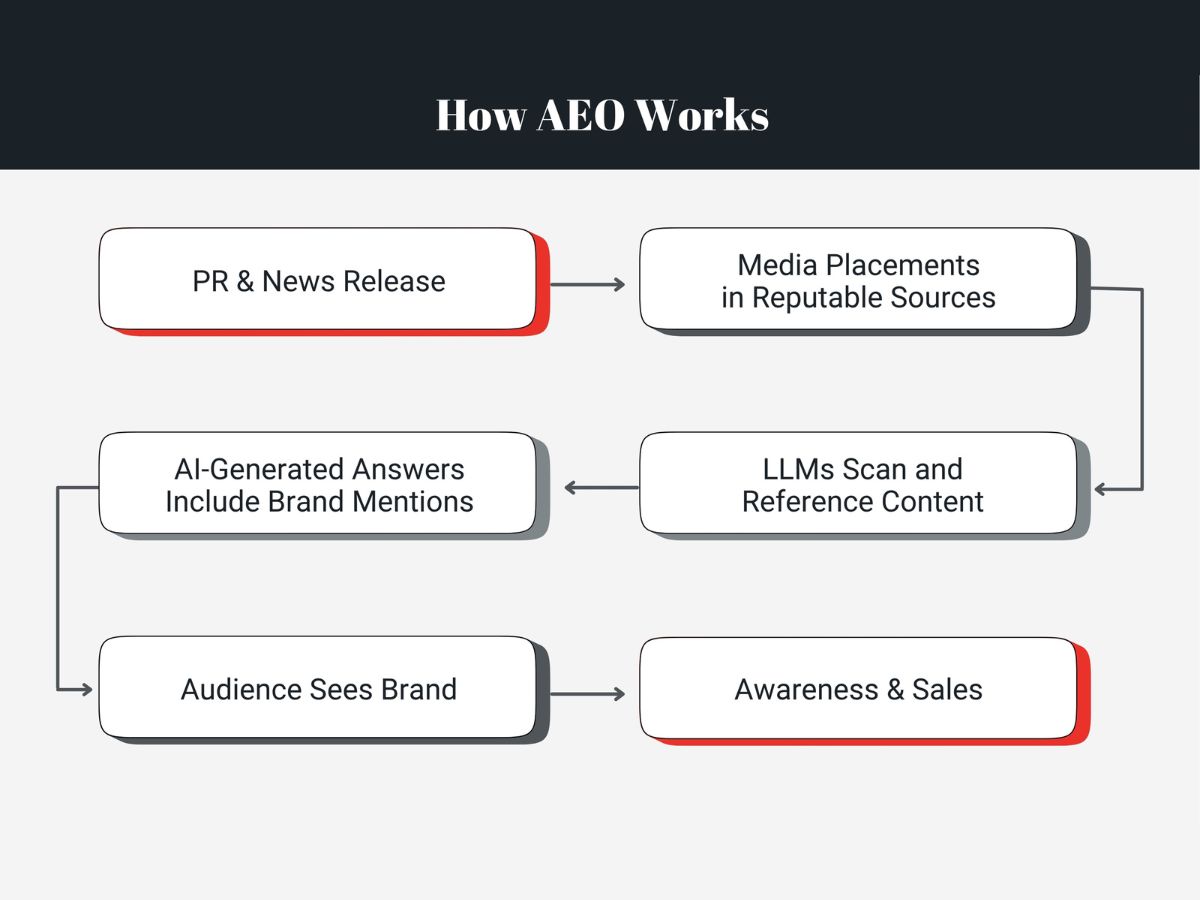
Answer engine optimization ensures your content appears in the answers large language models generate for user queries. PR plays a key role by securing media placements through pitches and news releases, positioning your brand as a trusted source for large language models. Since AI-generated responses often lack clickable links, being featured in reputable outlets is essential for building brand recognition. This method leads to greater brand awareness and drives sales without relying on traditional click-throughs to your website.
Since online media placements often begin with a news release, optimizing releases for both answer engine optimization and generative engine optimization—which ensures your content is embedded in the AI’s “knowledge base,” making it a go-to resource for AI-generated responses—is crucial. Both are key to ensuring your content is not only included in AI-generated responses but also recognized as a trusted source by AI systems.
To achieve this, news releases must strike a balance: they should be conversational and engaging while still following traditional newsroom standards like the inverted pyramid structure, where the most important information is shared first, and AP style. Additionally, they need to be scannable and easy for large language models to process to increase the chances they’ll be referenced in AI responses.
Think of the news release as a shortcut to a website citation. This doesn’t mean you need to abandon the human appeal of your news releases, because you should be writing for both humans and large language models. Structure, accuracy and credibility together determine what gets seen by large language models. Here are some tips to help you craft news releases that communicate effectively to humans and AI systems alike.
Use a clear and conversational tone with common industry keywords
Keywords are essential for ensuring your message is picked up by large language models. Consistently using the same keywords increases the chance your brand is mentioned in AI-generated responses. Use the terms your audience is likely to search for when researching your product, service or industry. Naturally incorporate these keywords into your news releases, prioritizing headlines, subheads and opening paragraphs to maximize visibility.
Unlike traditional SEO tactics like keyword stuffing and backlinking, large language models prioritize authentic, conversational content. Crafting news releases that align with natural search queries boosts the likelihood of being featured in AI-generated responses.
Be credible
Large language models pull responses from trusted sources, such as reputable news outlets with high domain authority scores. Boost the credibility of your news release by incorporating verifiable facts, compelling data and quotes from authoritative leaders within your organization. Instead of being used as filler, quotes should offer meaningful insights, commentary and substance. Using software that identifies reputable media outlets and tracks engagement ensures your release reaches trusted platforms. As a result, your well-crafted, credible content is more likely to be referenced by large language models in their responses.
Keep it short and make it easy to scan
Large language models favor concise answers and short sentence and paragraph structures. If a large language model gets lost in a sentence, it will stop scanning and move on to the next one. Large language models—and often human readers—want easy-to-digest content. Using short paragraphs, bullet points and subheads (like the structure of this blog) helps break up the text and make it scannable and more likely to be picked up in an AI-generated response.

Scannability isn’t everything. You still need to maintain the essence of a news release by sticking to the inverted pyramid structure, where the most important information comes first, followed by supporting details. This balance ensures that your content is reader-friendly for bots and humans while maintaining a professional tone.
Provide a long-form news release
Instead of just announcing the news, include a quote and then explain why it matters. Rather than providing only a name and title for your quoted expert, include a brief bio or link to their LinkedIn page.
Include multimedia and meta information
Multimedia elements such as images, videos or infographics can significantly enhance your news release by making it more visually appealing and engaging. Additionally, these elements play a crucial role in helping large language models better understand and categorize your content, increasing its chances of being effectively utilized in AI-generated responses.
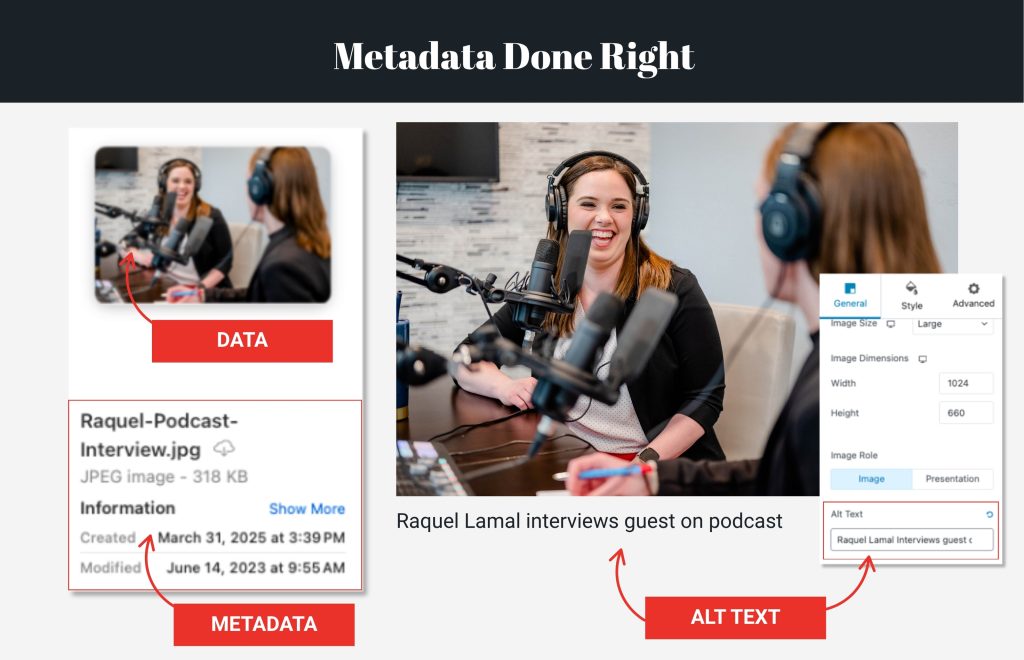
The key with multimedia is to use descriptive file names and alt text for these assets, ensuring they are accessible and easily indexed by large language models.
For example, instead of leaving an image named “IMG1234.jpg,” title it with a description such as “Company-Product-Launch-Event.jpg.”
Metadata is important because it helps large language models interpret content accurately. Metadata, or information that explains or describes other data—like a label or summary—acts as a roadmap, guiding AI to the most relevant parts of your news release and increasing the likelihood it will be included in AI-generated responses. By combining multimedia with well-optimized metadata, you create a news release that’s not only visually appealing but also AI-friendly.
As the digital landscape continues to evolve, optimizing news releases for large language models has become essential. News releases are no longer used just by journalists in a newsroom; now, you are crafting them for machines to ensure they appear in AI-generated searches.
By focusing on clear keywords, establishing credibility, structuring content for readability and incorporating multimedia with optimized metadata, you can ensure your content is included in AI-generated responses. This not only amplifies your brand’s visibility but also positions your business as a trusted industry authority. At Red Shoes Inc., we’re here to help you navigate these changes and craft news releases that resonate with both humans and AI systems. Ready to take your PR strategy to the next level? Let’s get started today.
Back to Blog